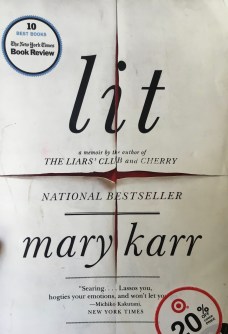
Lit by Mary Karr

For the first few weeks after reading Lit by Mary Karr, I could not walk into a restroom without thinking of prayer. While struggling to accept the customary Higher Power imperative of her 12-step AA program, Karr reluctantly offers her first prayers on the cold tiles of more than one bathroom. One such prayer closet lies within the same Cambridge “loony bin” (Karr’s term) where poets Robert Lowell and Anne Sexton may too have knelt during their respective stays.
IMG_0825

Published in 2010, Lit is the third of Karr’s bestselling memoirs. While The Liar’s Club (1995) and Cherry (2002) delve into the author’s turbulent childhood and teenage years respectively, Lit traces the journey of the adult Mary Karr from low-income college student at a Midwestern LAC to acclaimed poet, memoirist, and professor of creative writing. Lit‘s 386 pages primarily contain Karr’s first marriage and subsequent divorce, her struggle with alcoholism as a young mother – transitioning her journey to sobriety and religious conversion.

Prior to Lit, my personal exploration of Karr’s work was limited to The Liar’s Club and her most recent poetry collection, Sinners Welcome (2009). Yet again, I found Karr’s particular gift to be a profound, pleasantly irreverent voice and a figure skater’s finesse with a sentence. For example, standing in the kitchen, pregnant with her first child, and just having learned that her first poetry book would be published:

“I chew my caramel, satisfied as a brood sow in a mud wallow. Neither good nor ill can reach me.”

While skilled with imagery, Karr also knows how to drop metaphoric fluff to great effect:

“I keep getting drunk. There’s no more interesting way to say it.”

Despite Karr’s engaging wordsmithery, I sometimes found her adult emotional life difficult to access. For example, Karr repeatedly emphasizes that her son, Dev, is the reason she was able to become and remain sober. Dependent-free twenty-two-year-old that I am, I found myself wondering: What do you mean you looked at him and knew you had to stop?

I imagine a collective sigh from mothers around the world as they look wistfully past my genuinely confused face, and offer former Notre Dame football coach Lou Holtz’s poetic yet unhelpful description of Notre Dame:

“If you’ve been there, no explanation is necessary. If you haven’t, none is adequate.”

I raise this only because I’ve recently read the mother’s perspective better conveyed. Creative nonfiction writer Maggie Nelson excels in this area in The Argonauts (2015), in which she explores every detail of having a child in a way that challenges and enlightens. After a thorough description of giving birth to her son Iggy, Nelson writes:

“He is perfect, he is right. He has my mouth, incredible. He is my gentle friend. He is on me, screaming.”

There is much to discuss with Nelson – a blog for another time.

Yet I didn’t pick up Lit for Karr’s journey to sobriety, her account of motherhood, or even her story of becoming a professional writer – I picked it up because of one line on her Wikipedia page: “[Lit is] my journey from blackbelt sinner and lifelong agnostic to unlikely Catholic.”
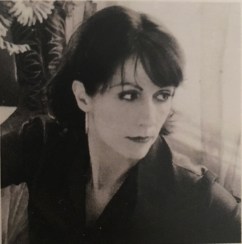
img_0847
Seems to have the secrets.

Prior to reading Lit, I mentioned my interest in Karr’s “unlikely Catholicism” to a friend. His response: “This might be what does it: Liz the Catholic.” Despite 16 years of Catholic schooling and a genuine interest in spirituality, I had taken a well-advertised break from Catholicism while in college. As someone who had recently bowed-out (with a bit of sound and fury), I had to know: why would someone choose Catholicism after having no religion for 30+ years?

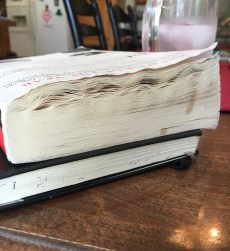
Flipping through my crinkled copy of Lit, which had been baptized with coffee, I notice that my annotating hand was particularly drawn to passages that confess spiritual reluctance. Karr calls this her”outlaw ethos.” Rather than delving into disagreements with doctrine or skewering corrupt popes, she openly discusses a deep aversion to the basic idea of God.

For example, “I’m trying to start hearing the word God without some reflexive flinch that coughs out the word idiot.”
IMG_0828
Any word on whether kindles are coffee-proof?

Karr’s hilarious forthrightness about her internal ego battle is the highlight of Lit. In successfully living beyond addiction and igniting spiritual healing, she is particularly accessible for those (like myself) who have become flippant about religion due to various news items, life events, etc. More than ‘we the flippant’ would like to admit, spiritual isolation can be a painfully empty feeling, and it requires a major push to turn around and proceed in the opposite direction. Perhaps surprisingly, it may help to read every possible facetious comment articulated by a well-respected poet.

Following a prayer journey begun in a bathroom, Karr delivers a glimpse of the other side: “The spiritual lens . . . is starting to rewrite the story of my life in the present, and I begin to feel like somebody snatched out of the fire, salvaged, saved.” Karr’s is a narrative worth encountering.
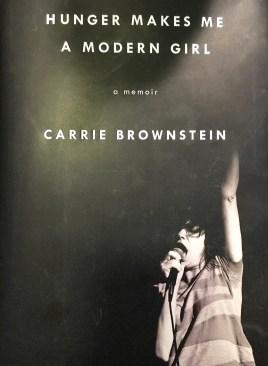
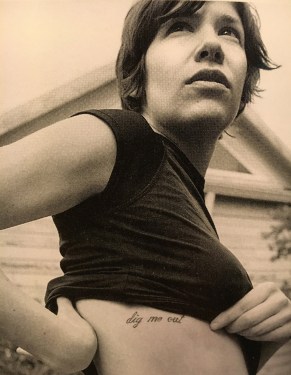


Hunger Makes Me A Modern Girl

REVIEW: Hunger Makes Me A Modern Girl by Carrie Brownstein

One cannot walk very far into a bookstore these days without spotting a new memoir by a familiar, talented, currently successful woman. A happy development, as I see it. I have been snatching them up ever since the debut of Tina Fey’s Bossypants – titles including Amy Poehler’s Yes Please!, Lena Dunham’s Not That Kind of Girl, Mindy Kaling’s Is Everyone Hanging Out Without Me? and Why Not Me?, etc. (Slighly outside of this category is Patti Smith, whose 2015 memoir M Train I recently devoured on the plane home for Christmas.) Today I want to briefly discuss a new nonfiction writer on the scene, Sleater-Kinney guitarist and Portlandia creator, Carrie Brownstein.

IMG_0084

I first spotted the chalky black cover of Hunger Makes Me A Modern Girl near a Joan Didion biography in an exceedingly well-curated bookshop in St. Louis, MO called Subterranean Books. Intrigued but easily distracted, I ended up leaving that bookshop with a pocked-sized copy of Marcus Aurelius’ Meditations. Two weeks later, a friend recommended the Amazon TV series Transparent (Jill Soloway, lots of awards, great show) in which Brownstein acts, and I threw Hunger Makes Me A Modern Girl on my Christmas list.

I began Hunger Makes Me A Modern Girl hesitantly even skeptically. Would it be interesting to me at all? A book focused on the history of a band I had never heard of until recently?

Then I read this line on the first page of the opening chapter: “My story starts with me as a fan. And to be a fan is to know that loving trumps being beloved.” With that gem of a thought, I committed to the journey. Brownstein seeks to make her journey as a young artist accessible, thought-provoking, even philosophical.

IMG_0089.jpg

I’ve read the occasional music memoir – most recently Scar Tissue by Anthony Kiedis of the Red Hot Chili Peppers. Though reading about Kiedis’ struggles with addiction, fame, etc. was a worthwhile empathetic experience, at times it felt like an extended Rolling Stone interview: “Tell the readers EXACTLY where you were when the lyrics to ‘Under the Bridge’ came to you.”

Hunger Makes Me A Modern Girl is more than a simple chronology of album releases and subsequent tours – it is an introspective exercise into the creative process, an intentional dispelling of rock-and-roll mythology, and generally, a portrait of a young artist’s life. She discusses her transformation from concert attendee to performer, from student to creator, from fan to icon.

IMG_0087
Not graduates of a Hunter Safety course.

For example, Brownstein discusses the “codified language” of the indie music culture of 1990s Olympia, Washington. It’s a familiar concept, this snobbish side-effect of knowing a little bit too much about a particular thing. “You know [insert obscure band]?” “Cool, you should also check out [even more obscure group], they just started playing today and only like three people have heard this song.” I’m sure most people can think of a category in which they are guilty of dismissing newcomers and subtle one-upmanship. One of Brownstein’s greatest strengths as a writer is her ability to identify common social tendencies – particularly those within the music scene – and to nudge readers to reexamine them. (Relevant Portlandia clip: “Did You Read It?”)

Brownstein is an insightful writer and an appealing – if at times overly self-deprecating – personality. She discusses struggles with inattentive, independently troubled parents, anxiety and depression, and loneliness in early adulthood. Her story is relatable and strikingly modest. Additionally, and importantly, Carrie is a killer guitarist. One won’t find a trace of self-promotion in the novel, but evidence can be found in the song “Entertain” from Sleater-Kinney’s 2005 album “The Woods.”

Leave Marcus Aurelius on the shelf (to collect the dust of good intentions) and take Hunger Makes Me A Modern Girl to the checkout.  If nothing else – listen to Sleater-Kinney’s new reunion album, No Cities to Love (2015). Carrie says it best: “To become a fan of something, to open and change, is a move of deliberate optimism, curiosity, and enthusiasm.

“A Book Blog, Liz?” Let Me Explain

Throughout the (almost) twenty-one years I have been able to speak, I have confidently asserted a variety of future plans.

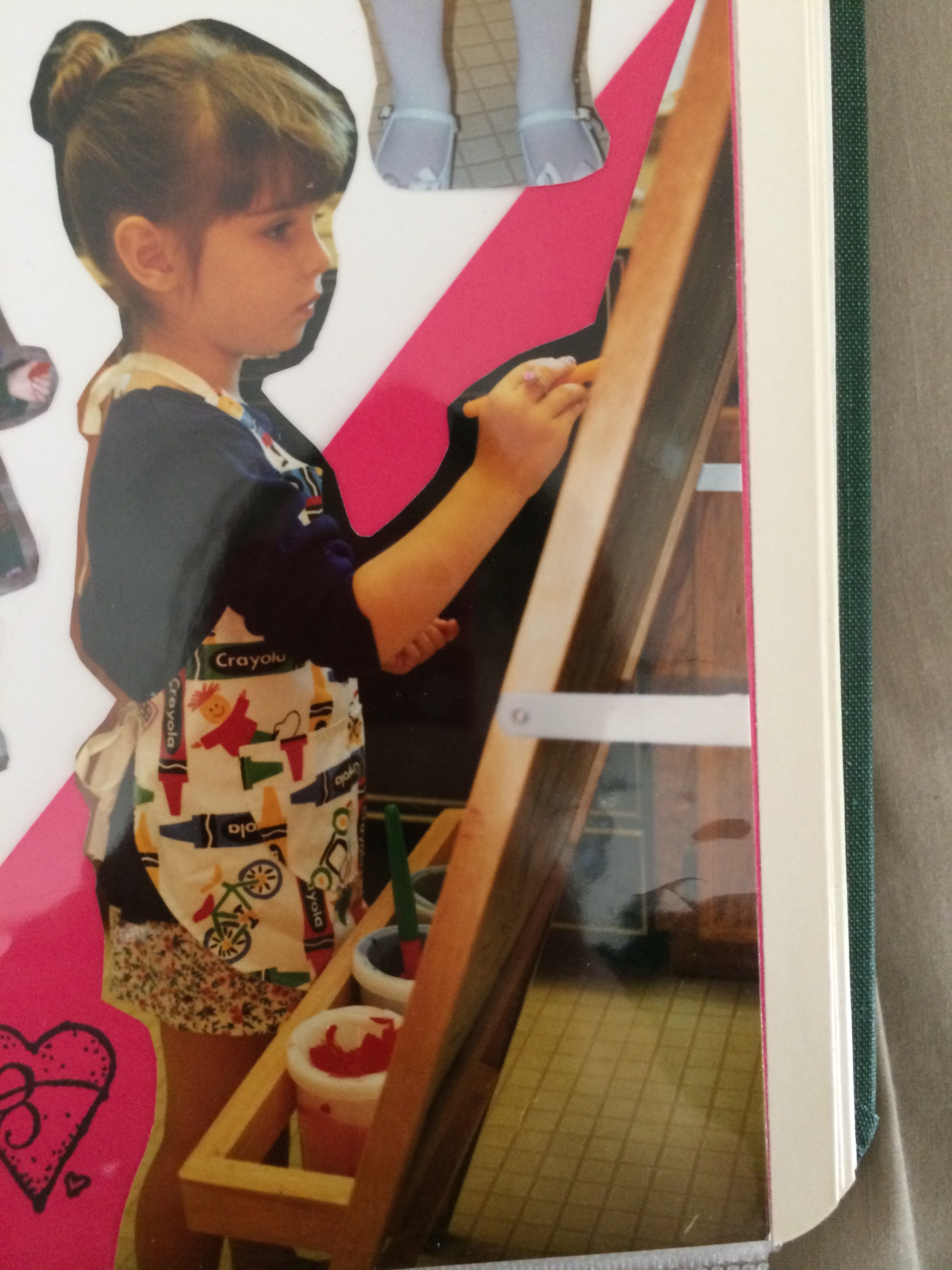
“I’m going to be an artist,” my five-year-old self declared to inquiring adults, proffering pictures of family members with potato bodies, toothpick limbs, and impossibly wide smiles.

Aspiring artist at work

This was followed by a fifteen year period of “I’m going to be doctor,” which I stubbornly insisted upon despite a variety of red flags (including a very real phobia of puking people).

It was only during my first semester of college as a pre-med student that I recognized my folly, surreptitiously skipping many a chemistry class in order to dedicate my efforts to a required lit seminar: “Shakespeare’s Major Tragedies.”

The moment of recognition went something like this: “Shit. There won’t be any lit classes in med school.”

***

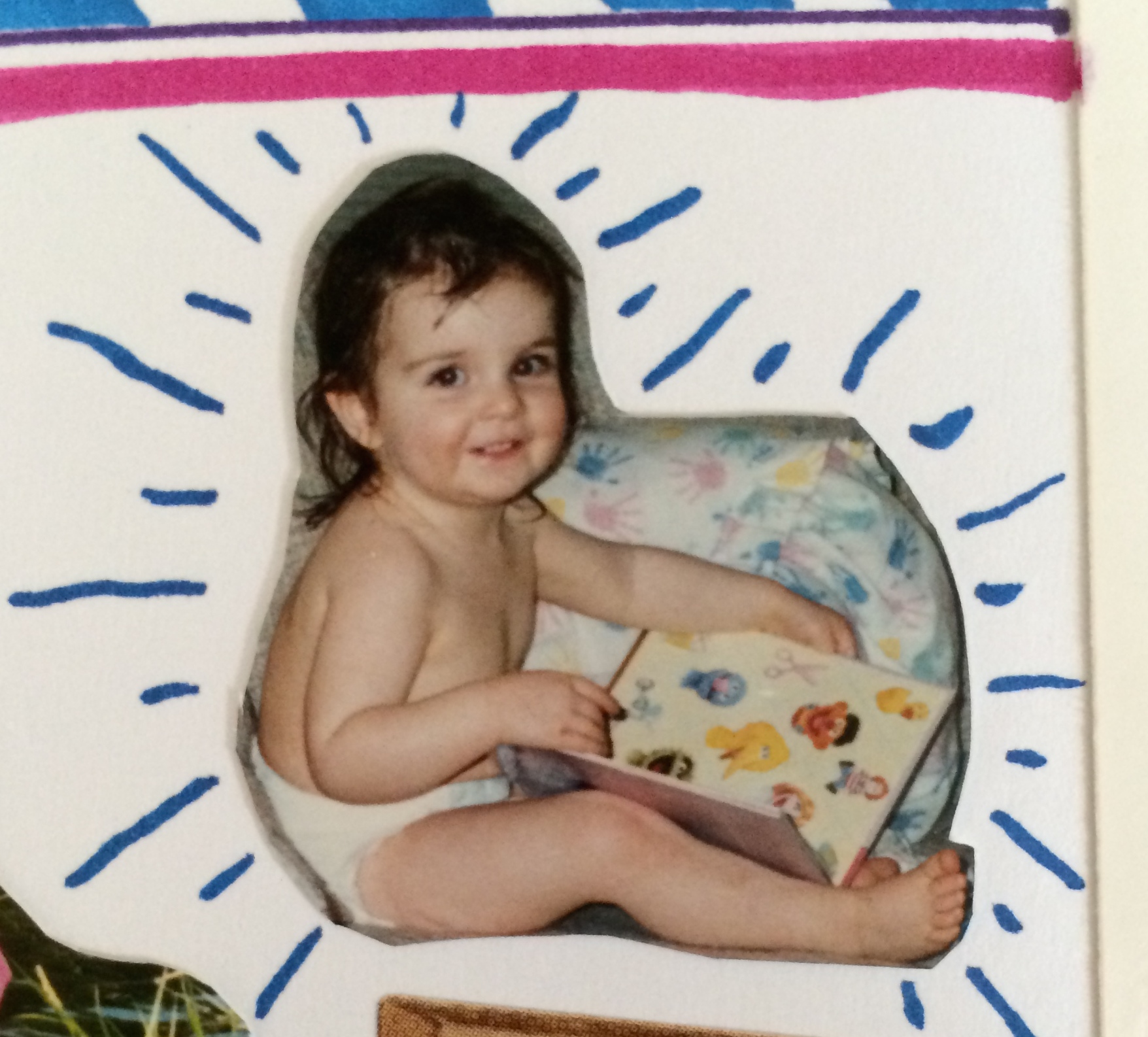
As far back as my memory reaches, books have been an essential part of my existence. Even as an illiterate toddler I carried around piles of books and “read” by reciting the story from memory. (Shout out to my dad for putting in long hours reading through the pile as part of my bedtime ritual.)

Evaluating multiculturalism and postmodernism in Sesame Street
Searching for postmodern themes in Sesame Street

I began reading Harry Potter and the Sorcerer’s Stone in first grade and finished the final words of Harry Potter and the Deathly Hallows the summer before eighth grade (the day it came out, obviously). In the interim, I devoured all varieties of fiction, including the timeless stories of Roald Dahl, the tales of the resourceful feminist Nancy Drew, the blatantly Catholic Chronicles of Narnia, the youth-friendly murder mysteries of Marry Higgins Clark, the obligatory Twilight Saga, and anything and everything by resident boy-expert, Meg Cabot.

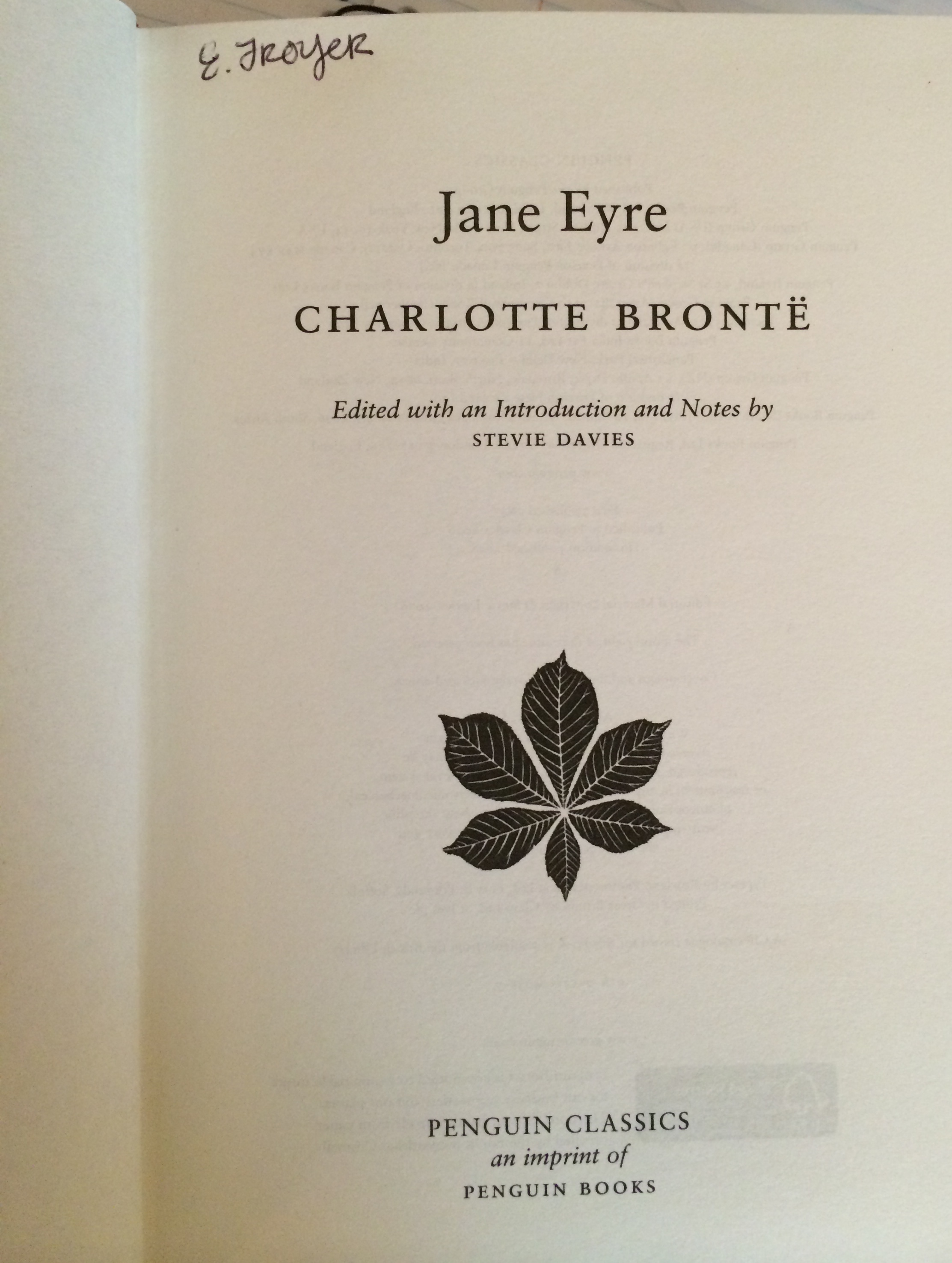
With less time to read in high school, I prioritized homework from English class over Calculus and packed as much reading into my summers as possible. One summer I spent an entire month on Jane Eyre and felt hugely accomplished as I crossed out the title on my stained and wrinkled “101 classics to read” list. I then immediately turned to the inviting pink jacket of Tina Fey’s Bossypants to decompress.

Will not be re-reading anytime soon

Now an English major at Notre Dame, my love for books has deepened in the company of brilliant professors, visionary authors, and most of all, talented and thoughtful fellow students. I love every minute of it – okay, except for 4am when I’ve already had 5 coffees and I would rather be talking to people, watching reruns of The Office, or sleeping than railing on Kate Chopin’s misogynistic contemporary critics for 10 double-spaced pages.

***

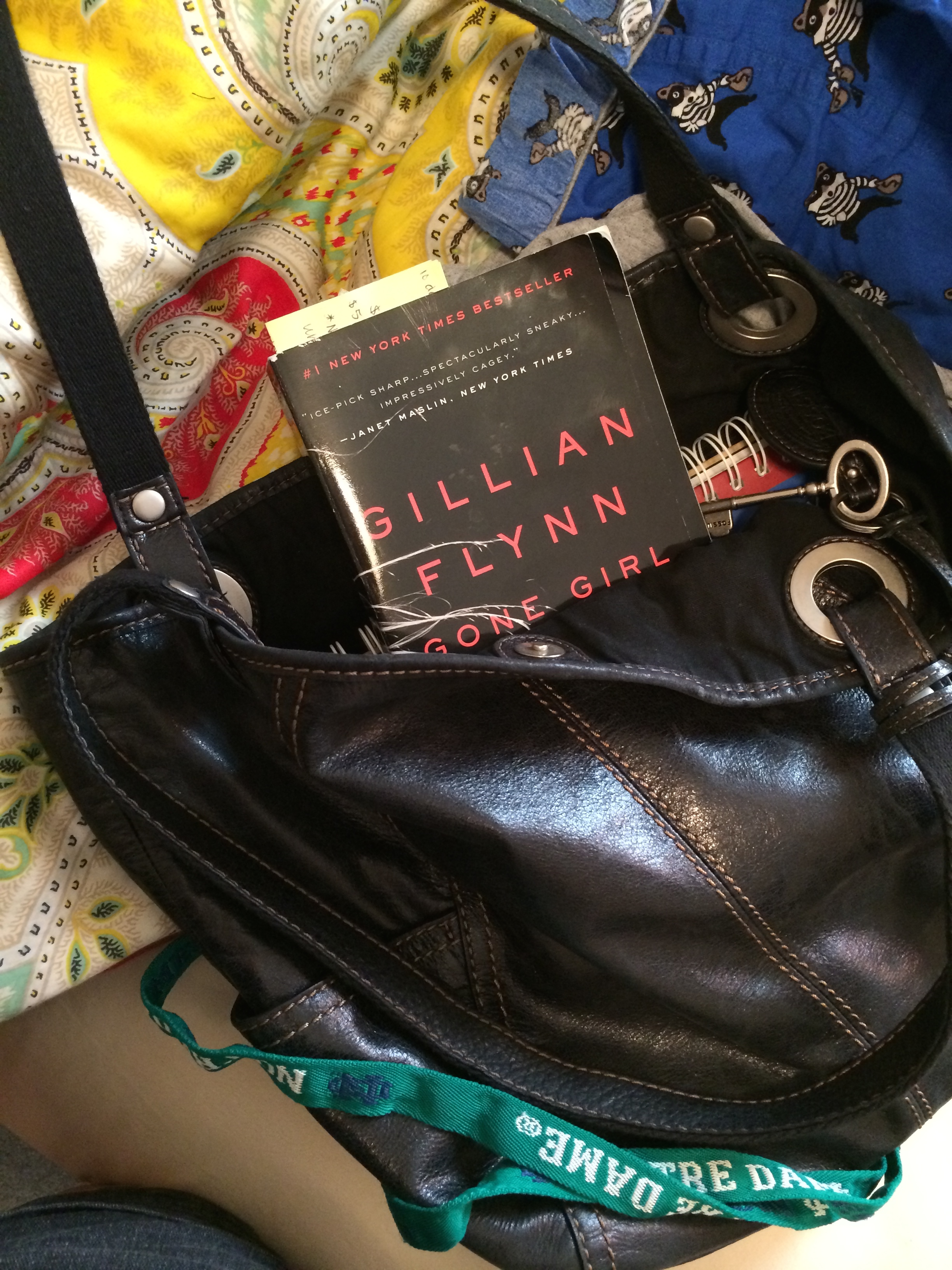
I almost feel physically uncomfortable without a book nearby. I carry books like some people carry miniature purse dogs – a faithful companion for waiting rooms and car rides; a respite from boredom and monotony; a dependable conversation-starter for awkward social moments.

I have a tendency to take my current read to places where I know I’ll never have a chance to open it, like the Starbucks drive-through, my job at Dean Younce Oral and Maxillofacial Surgery, and the library cubicle where I’m supposed to be uber-focused on studying for finals. It’s borderline compulsive.

Today's purse dog
Today’s purse dog

Essentially, this blog is an opportunity to reevaluate, revel in, and share my books. With plans to work in the editing and publishing realm of productive society one day, it will be valuable to practice reviewing books. And though I claim only a nominal understanding of this blogging platform and a limited arsenal of life-experience and material as a twenty-year-old college student, I am giddily excited to start nerding out about books on the internet.